Your Anchor Text Profile Should Be Boring — Here's Why That's a Good Thing
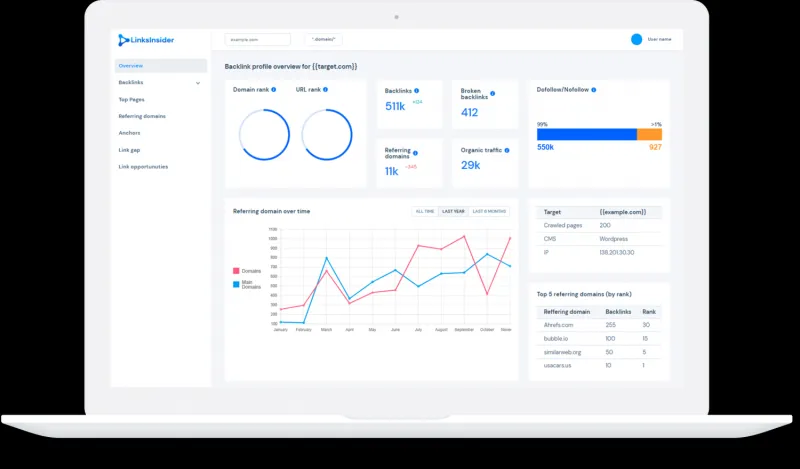
Photo: seo analytics anchor text backlink profile dashboard laptop, via dataforseo.com
Somewhere along the way, SEOs got convinced that anchor text is a slot machine. Type the right keyword into the link, pull the lever, watch the rankings roll in.
That thinking made sense in 2011. In 2025, it's the fastest way to get a perfectly good backlink profile flagged as a manipulation attempt.
Here's the uncomfortable reality: the most valuable anchors in your profile are probably the most boring ones. The "Acme Marketing" links. The bare URLs. The "this article" and "read more" anchors that make keyword-obsessed SEOs cringe. Google has spent 15+ years teaching its algorithm to recognize natural anchor distribution — and natural means boring.
Why Over-Optimized Anchors Scream Manipulation
Think about how links actually happen on the web. A journalist at a Midwestern newspaper cites your research and writes "according to Acme Analytics." A blogger in Austin drops your URL into a resource list. A Reddit user pastes a naked link. Almost nobody types "best CRM software for small business" when they link to your CRM comparison page.
When a site's anchor profile is loaded with exact-match keywords, it doesn't look like organic endorsement. It looks like someone placed those links — because they did. And Google's link spam systems are tuned to catch exactly that pattern.
The sites that rank consistently? Their anchor profiles look like a yawn: heavy on branded and URL anchors, light on everything else.
The Boring Anchor Framework: A 5-Step Audit
Pull your backlink report from Ahrefs, Semrush, or your tool of choice and run every anchor through this framework:
1. Categorize every anchor. Sort links into five buckets: branded ("Backlinko"), naked URL ("backlinko.site"), generic ("click here," "this guide"), partial match ("guide to link building from Backlinko"), and exact match ("link building guide").
2. Calculate your percentages. You want to know what share of your profile each bucket occupies — not just your totals, but per-page too.
3. Flag exact-match clusters. If any single page has more than a handful of exact-match anchors pointing at it, you've found your biggest liability.
4. Compare against your top competitors. Look at 3–5 sites outranking you. Their anchor distributions are your de facto benchmark for what Google currently tolerates in your niche.
5. Rebalance going forward. You can't always control existing anchors, but you control every outreach email, guest post, and digital PR placement from here on out.
What a Healthy Ratio Actually Looks Like
Every niche is different, but across profiles we've audited, a defensible 2025 distribution looks roughly like this:
- Branded: 40–55% — the backbone of any natural profile
- Naked URLs: 15–25% — especially from forums, directories, and citations
- Generic: 10–15% — the anchors everyone's afraid to ask for but real people use constantly
- Partial match: 5–10% — descriptive without being robotic
- Exact match: 1–5% — a sprinkle, not a strategy
Notice how small that exact-match slice is. If your gut reaction is "but that wastes the link," you're still thinking like it's 2011. Modern ranking systems lean on far more than anchor text — relevance signals, entity understanding, and user behavior all factor in. The anchor's job is simply to not disqualify the link.
Boring Is a Feature, Not a Bug
The best anchor strategy in 2025 is the one nobody notices. When you run outreach, default to branded or URL anchors. Let writers phrase links however they naturally would. Stop requesting keyword anchors from publishers — you're paying a premium to raise your own spam signal.
Your link profile should look like it grew itself. Boring, organic, slightly messy. That mess is your moat.